The sheer scale of the AI data centre boom represents a once-in-a-generation opportunity for data centre builders. Worldwide, around £2.2 trillion will be spent on AI data centres between now and 2029. However, the unprecedented scale of demand and the speed at which AI infrastructure must come online to meet the moment presents a huge challenge. AI is not only changing the size of the facilities being built, but also how and where they’re delivered. Increasingly, off-site manufacturing of vertically integrated modular electrical rooms is emerging as an essential tool in helping OEMs meet the scale of demand at speed.
The AI Boom is Here, and It’s Bigger Than Anyone Could Have Imagined
In 2025, the global market capacity of data centers was approximately 59 GW, with Goldman Sachs Research estimating that there will be around 122 GW of data center capacity online by the end of 2030.
While AI is the primary driver of this explosion in demand, the other technologies that drove data centre growth prior to the boom aren’t slowing down either. Internet of Things (IoT) technology is pushing edge adoption, the ongoing 5G rollout, and an overall adoption of digital services continues to drive both hyperscale and regional cloud buildouts.
Nevertheless, AI’s impact on data centre pipelines goes beyond the number of data centres being built. Facilities designed to support AI training and inference workloads are also pushing rack densities into the stratosphere.
Building the infrastructure to support the age of AI is as much a power challenge as it is one of securing GPUs or taming environmental impact. Power requirements per rack have already doubled, tripled, quadrupled, and could easily go 10× in the next few years. Pre-AI Boom, rack densities hovered around 10–15 kW; now they’re hitting 40–80 kW in the same physical footprint and growing. The powertrain has to keep up.
Manufacturing, Supply Chain, and Site Selection: New Challenges and Old Methods
The physical build-out of data centres has become another thorny problem. Developers are encountering mounting execution hurdles, with projects mired by lengthy equipment lead times ranging from eight to 24 months.
Speed is of the essence in the current data centre landscape. More conventional manufacturing processes simply can’t keep up. These problems are further compounded by ongoing supply chain disruption and rising costs as Brexit and Trump’s Tariffs make moving goods across borders an ever more expensive, cumbersome process.
Demand is also intensifying the pressure on an already undersized talent pool. While overall construction labour costs are rising, the most critical constraint is access to the highly specialised electrical engineers and skilled technicians required for complex, high-density power commissioning on-site. Securing this essential expertise is a major bottleneck, often commanding premium rates that cut directly into a builder's P&L and delay project completion.
Even accessing talent (at any price) is a problem. In Europe’s biggest data centre markets (the FLAP-D), capacity saturation is already pushing data centre companies out into secondary markets. Frustrated by long lead times and regulatory hurdles, builders are flocking to Tier 2 markets like Lisbon, Madrid, and Milan. While approvals may be faster and land may be cheaper, new markets mean fewer local manufacturing capabilities and smaller talent pools.
The upshot is that demand for AI workloads outstrips the pace at which data centre builders can deliver their projects. Businesses can’t afford to wait years for data centre construction to be completed, and every day lost impacts revenues. Traditional on-site construction methods are notoriously slow and cumbersome, which is where modular construction off-site offers a potential lifeline for the industry.
Modular construction allows for speed and scale of delivery
Once very much a niche application suited to small projects in unconventional locations, modular off-site construction is emerging as a vital source of speed at scale in what would be considered traditional data centre builds.
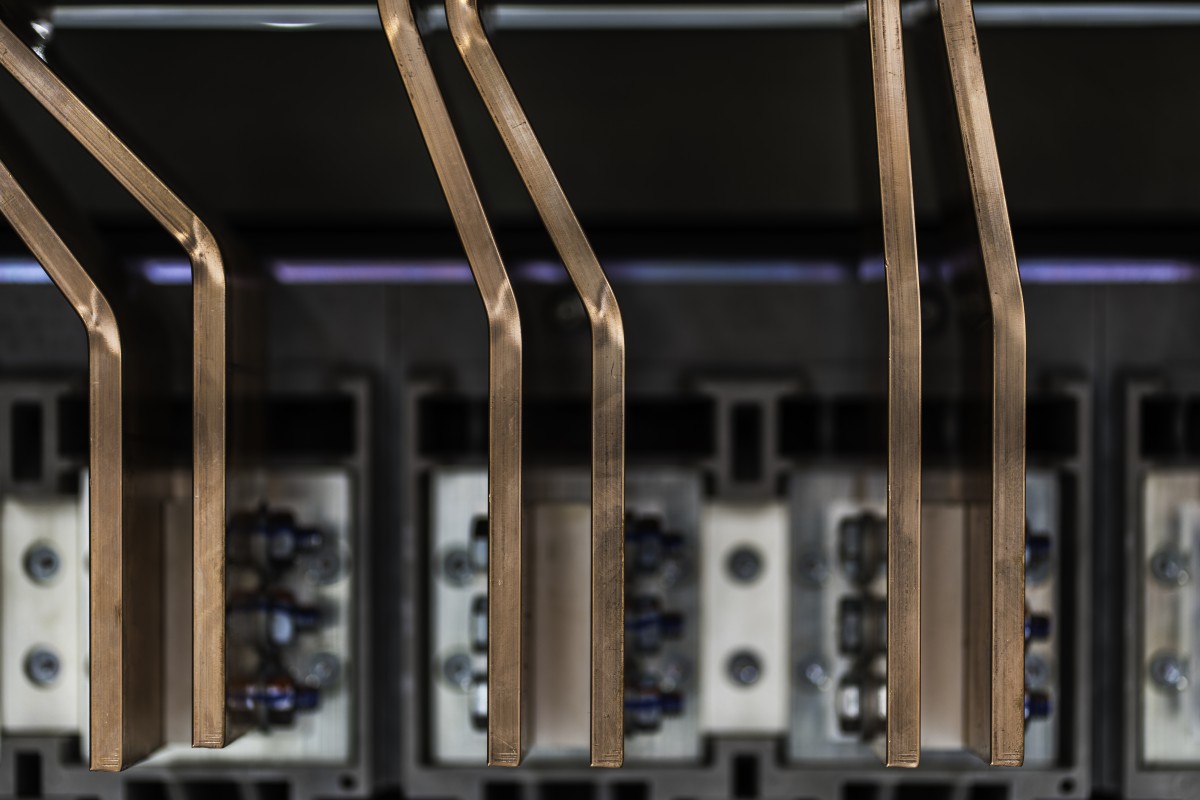
Off-site manufacturing supports faster and more efficient delivery by prefabricating all elements of the power infrastructure at dedicated campuses within skid-mounted, containerised units. Each pod contains a complete suite of power equipment, including high-voltage input, step-down transformers, low-voltage distribution, UPS systems, battery backup, and generator transfer capability. Controlled factory settings then mean they can be commissioned and tested before ever leaving the manufacturing facility. This represents a degree of vertical integration to which traditional data centre projects haven’t had access.
Historically, power components arrived at the site from multiple different suppliers requiring lengthy, involved onsite integration and testing. The modular approach shifts this labour, time, and skill-intensive work, which is often vulnerable to local weather and logistical disruption, into a controlled factory environment. The result is improved quality, tighter tolerances, and the completion of rigorous testing, including Factory Acceptance Testing (FAT), to at least Level 1 before any units are shipped. This critical step removes significant specialist electrical engineering and commissioning requirements from the construction site, dramatically reducing project risk and accelerating final handover. This model also allows manufacturers to engineer for specific climates. Pods built for Nordic locations are designed to operate at minus thirty degrees Celsius, while units destined for southern Europe are prepared for temperatures of forty degrees or higher. As the climate crisis worsens, on-site manufacturing is going to face worse and more frequent disruption due to extreme weather and natural disasters like flooding or heatwaves.
Completing the majority of manufacturing and testing off-site also shortens lead times by allowing power infrastructure to be assembled in parallel with other construction on-site. Modular power pods can be completed while the data hall is still under construction, allowing projects to progress at the same time, rather than one after another.
For data centre builders looking to build bigger and faster in new markets amid a labour shortage, it’s easy to understand the appeal.
The approach also supports more efficient use of valuable floorspace. Land in proximity to power generation sources and population hubs where data can travel with minimal latency is rising sharply in price. Operators paying a premium for square footage look to maximise revenue by devoting as much area as possible to servers, rather than housing non-revenue-generating electrical infrastructure. Shifting the powertrain into external pods mounted on skids frees up space for more racks and therefore more income.
There is also an element of flexibility here; standardised pod designs can be deployed wherever demand arises, enabling customers to redirect modules to different sites as requirements evolve. Off-site manufacturing can run in parallel with civil works, accelerating delivery even further.
In an age of skyrocketing costs, modular powertrains also reduce up-front capital expenditure. Instead of building the full electrical backbone of a facility before clients commit, operators can deploy pods when needed and tailor them to each customer’s specifications. Because pods can be lifted out and replaced, the modular approach also better supports phased expansion and helps data centres balance cap-ex and op-ex across the facility’s lifecycle. Data centres can begin with an initial deployment and easily scale across subsequent phases using the same modular architecture.
For builders seeking efficient European access and a guarantee of high-specification manufacturing and precision engineering, this proven modular method provides a reliable and expedited solution for scaling AI capacity.
Modular in the Mainstream
Modular construction is stepping out of its previous role as an enabler of somewhat niche applications like remote sites, disaster recovery facilities, and edge deployments. Modular is moving into the mainstream.
It’s a strategy driven by the need for flexibility and speed at scale. The combination of high-capacity manufacturing, controlled conditions, and repeatable modular design enables producers to support dozens of concurrent builds and deliver outcomes that traditional construction approaches can’t.