LogicMonitor, an AI-centric platform for autonomous IT, recently published research highlighting a significant shift in how UK IT organisations are managing observability. As infrastructure becomes more complex and AI adoption increases, fragmented monitoring environments are prompting organisations to reassess their strategies and consolidate tools.
Investment trends indicate strong growth, with 91% of UK IT organisations planning to increase observability budgets over the next 12–24 months, and 86% planning to increase spending on monitoring tools. Despite this, more than 20% are still evaluating or planning new observability deployments to address evolving operational requirements.
Key findings include:
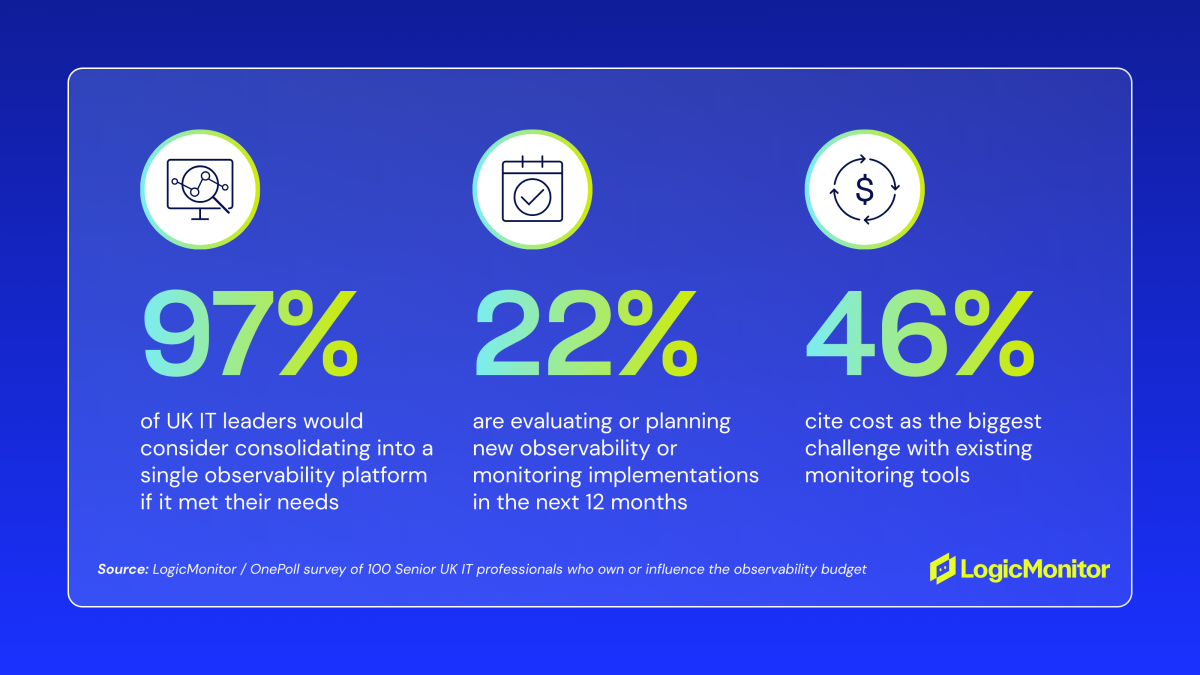
- 97% of UK IT organisations would consider using a single observability platform if it met their requirements.
- 22% are currently evaluating or planning new observability or monitoring implementations within the next 12 months.
- 46% cite cost as the main challenge with existing monitoring tools.
The leading drivers for AI-enabled observability are cost and resource optimisation (49%), improved predictive analytics (36%), and automated remediation (34%).
Expectations of observability are shifting from reactive approaches focused on post-incident response to earlier detection and faster resolution, reflecting a broader move towards more proactive IT operations.
While adoption and maturity levels vary across Europe, UK organisations show relatively high levels of AI adoption in observability, with 44% of senior IT decision-makers reporting full use of AI, compared with lower levels in France and the DACH region. However, challenges remain in unifying data foundations needed to scale AI-driven resilience.
UK organisations are also taking a more proactive approach to modernising observability. Only 6% reported that a significant outage triggered their most recent investment. Instead, security and compliance requirements, along with planned technology refresh cycles, are the main drivers.
Overall, there is broad agreement that scalable AI-driven operations require consolidated, integrated data foundations. Without unified visibility, the benefits of automation and predictive capability remain limited.